Physical Address
304 North Cardinal St.
Dorchester Center, MA 02124
Physical Address
304 North Cardinal St.
Dorchester Center, MA 02124
Colonialism often used interchangeably with colonization has to do with taking control of the administration, resources and tools of a territory or country by another using means such as economic, political or military means. It is far encompassing than that of colonization.
The difference between the two has to do with the fact that, colonization has to more or less do with “boots on the ground”; basically, moving some people from the host country to settle on the newly colonized one. Colonialism sort of has an indirect rule.
With regards to Africa, what mostly happened during centuries past was colonialism except for isolated cases such as France making Algeria an extension of itself by having a large French population over there.
This post seeks to unravel how it all began, maybe some benefits and whether we can lay blame on the feet of Africa’s colonial masters for the economic quagmire the continent finds itself in.
Long before anything resembling colonialism took place, there was the much-known slave trade taking place. As the name suggests, it was the selling of Africans as slaves to the Arabs and Western powers to be used as free labour on plantations or house helps.
This was a very dark period as families and communities were torn apart due to constant slave raids by slave masters. Ironically, African chiefs and kingdoms as whole used to raid other tribes and capture slaves to be sold for hefty profits.
With time, slavery was mostly abolished in the Western hemisphere except the United States which held on for much longer and was only done after the civil war.
Europeans began arriving on the shores of the continent quite early. As early as 1471, the Portuguese explorer Don Diego D’zambuja landed on the shores of the Gold Coast now known as Ghana.
In the subsequent decades, others such as the Dutch, Portuguese, British, Germans and the likes followed.
Trade was initially what drove the Western powers to Africa, it went on successfully for centuries before our main topic took place.
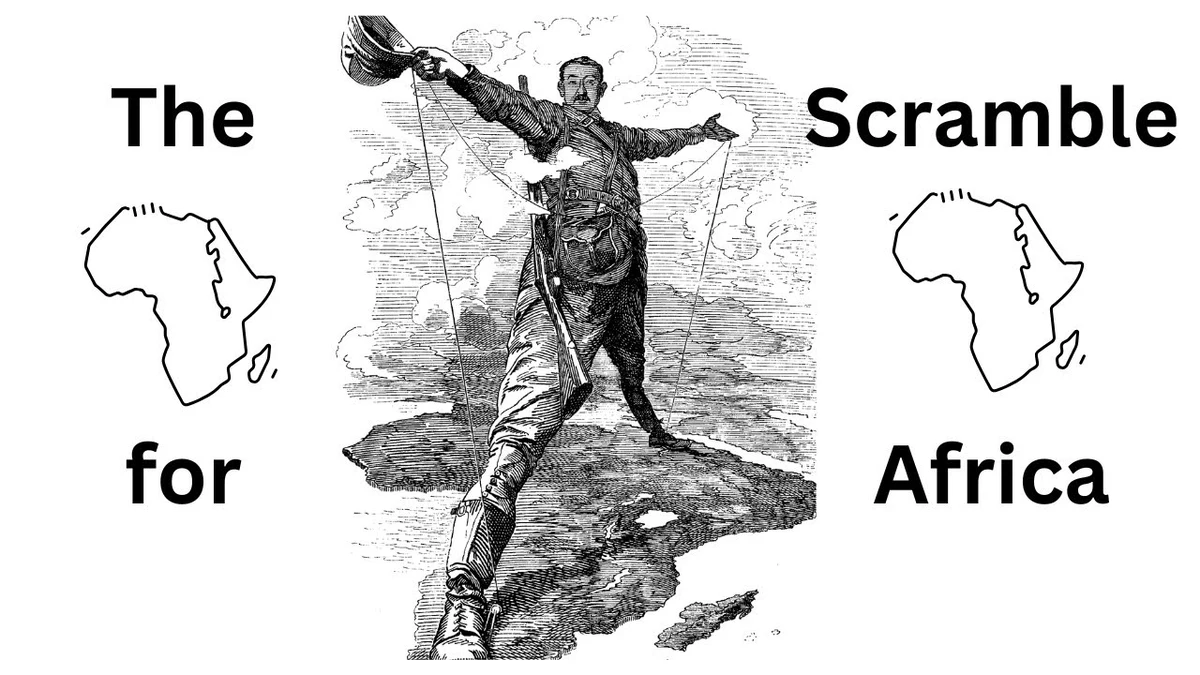
The Berlin Conference of 1884-1885 can be considered the formal start point of African colonialism and colonization. This was a meeting between European empires at the German city of Berlin to decide amongst themselves how to carve the continent for themselves.
Historians refer to this as the Scramble for Africa. The British Empire took areas such as Ghana, Nigeria, South Africa, Egypt, Sudan etc. The French had countries such as Upper Volta (Present day Burkina Faso), The Ivory Coast (La Cote D’Ivoire), Senegal, Algeria etc. The German empire was in charge of Togo, Namibia etc.
They basically carved up the continent for themselves like what butchers do to beef. The effects of this action still resonate today. Britain and France had the lion share of the continent; this wasn’t strange as they were part of the largest empires at the time.
The points you learned back at school concerning how good colonialism was to the continent hold true and will be talked about here.
With the majority of Africans not formally learned at that time, colonialism brought the use of formal languages such as English, French, Portuguese etc. to its colonies. For the first time ever, a large group of indigenous people had a common language of communicating with each other.
Most African countries have several ethnic groups; just imagine the headache it will be trying to find a common language for national discourse. Amongst Yorubas, Igbos, Hausa, Fulani, Nupe, Itsekiri, Ijaw, Kalabari and the likes, how do you find a common language for all?
How about Ashanti, Ewe, Mole-Dagbani, Ga-Adangbe, Guans and the likes which language do you use to supersede the rest? You can clearly see the headache that will have resulted.
Herbal or local treatment was the order of the day pre-colonialism. It wasn’t archaic or bad in itself but fell short in some areas. Colonial masters brought about modern medicine and surgeries to handle health issues.
You can talk about the paved roads, concrete bridges, railways, hospitals, schools and the likes. This changed a lot of things drastically. Trains and automobiles were introduced for the first time.
With all these positive effects listed in the previous section, why do some individuals claim colonialism didn’t really do any good to Africa? Why is the continent so under-developed economically?
You can’t blame such people as it’s normal to question the status quo when all doesn’t look right. Under normal circumstances, Africa should be a burgeoning continent because minerals abound in many countries.
Gold, diamond, tin, copper, cocoa, coffee and even rare earth minerals which have become a geopolitical and economic hotcake lately.
Let’s dissect things critically as we always do here on Phantom Corner, shall we? How many African countries blessed with minerals can be considered developed?
The resource curse seems to follow well endowed countries. Let’s get deep and serious now. We’ll look at some noticeable trends and then you can decide for yourself if they have a bearing on what Africa suffers for economically today or not.
Yes, colonial powers constructed roads and railways in the colonies but have you noticed something peculiar with them especially the railroads? If you haven’t figured it out by now, look at this; railroads always lead to the ports or harbours.
You would think railroads will pass through major population areas in order to cater to public transportation but no, such areas usually have poor or ineffective public transport systems.
Railroads were built purposely to carry raw materials from the hinterlands to the ports to be loaded unto ships and transported abroad. It makes sense if you’re a colonial master; why cater to the people’s transport when you can just focus on extracting and moving raw materials out of the country?
Another point, why not establish processing facilities in such countries to refine the extracted minerals which will help the local economy? This issue still rings today? Africa is still a resource extraction continent at best.
It’s time to look at another reason for underdevelopment; a geopolitical one. One people will call you a conspiracy theorist for (lol). Notice this trend through the decolonization period till today.
When you hear Kwame Nkrumah, Patrice Lumumba, Thomas Sankara, Muamar Gadafi, Sekou Toure and the likes, what comes to your mind? They all have one thing in common and well, let’s say this didn’t go down well with the powers that be.
European powers were basically forced to grant freedom to their colonies, but well, let’s say they didn’t want to relinquish control without having some form of influence on the latter.
The old form of colonialism was gone but something sinister and deadly took its place; neocolonialism. Former colonial masters still had and continue to have a say in affairs of their former colonies, at least in the shadows.
Leaders are basically coerced to sign in policies that benefits former colonial masters to the detriment of their own people.
Notice this pattern across Africa; most countries mainly have a strong primary production sector but processing and refining of raw materials into value added goods are absent. This is isn’t a coincidence, it’s intentional.
Having a good economy means one thing; power. A country can decide what it wants to do without interference, nobody can really tell them what to do. As a former colonial power, would you like this to happen? You tell me.
Manufacturing and Services sectors are basically miniscule even though they are necessary for African countries to have. Why don’t African leaders just create industries that can help their economies?
Let’s take a dive into a bit of 20th Century history. Kwame Nkrumah has been hailed as one of the founding fathers of African independence. He personally created many industries to make Ghana self-sufficient.
How did he end up? Deposed in a foreign backed coup by the usual suspects. His crime? Trying to create an economically independent Ghana. Let’s look at its northern neighbour.
Burkina Faso under Thomas Sankara undertook a lot of development projects to raise the living standards of Burkinabes, how did he end up? Well, his close friend with the assistance of foreign backers took him out in a bloody coup.
And oh, let’s not forget Patrice Lumumba. DR Congo is one of the world’s resource rich countries but ironically remains one of the poorest. He wanted to also nationalize factories and develop the country’s economy.
His fate? Chased down a field like a common criminal and executed. Mobutu Sese Seko, an army officer took over and the rest is history. DR Congo continues to suffer conflict decades after.
Barely anything has changed in this century. There’s a double standard with regards to what we term “International Law.” Leaders who do the bidding of former colonial masters stay in power for decades while impoverishing their people.
Former French colonies are the hardest hit; many have poor economies mostly due to the fact that their leaders are foreign backed and cannot do anything to create good economies.
France and its former colonies have Franc Afrique; a policy of some kind of unity as a former master and its colonies. The latter countries have their national reserves in the French National bank.
France interferes and meddles in their matters at will using the cover of fighting terrorism. The former British colonies are in a better shape but not completely free from the fangs of neocolonial strings.
Having been taken through the memory lane of history, can we definitely say that colonialism is the cause of Africa’s poor economies? Or colonialism’s sinister child neocolonialism can be blamed for this?
Maybe we might want to say African leaders are naturally corrupt or just lack economic foresight. We will love to hear your response in the comments, feel free to do so.